
How to Get a Cooler Pool Deck: Why Overlays Matter in Arizona
If you have ever stepped barefoot onto a scorching hot pool deck in the middle of an Arizona summer, you already know how uncomfortable backyard surfaces can become. In places like Phoenix, Mesa, Gilbert, and Scottsdale, concrete pool decks absorb intense solar heat all day long. By the afternoon, many surfaces become too hot to comfortably walk across.
For homeowners investing in outdoor living spaces, cooling the pool deck is no longer just about comfort. It is about usability, safety, and creating a backyard that actually works during Arizona’s hottest months.
At Stafford Home & Patio, we help homeowners design outdoor spaces that are built specifically for the desert climate. One of the most effective upgrades we recommend is installing specialized concrete overlays for patios and pool decks that are designed to reduce surface heat while improving the overall look of the space. Looking for a cooler pool deck Arizona? We're here to help. Read below to learn more.
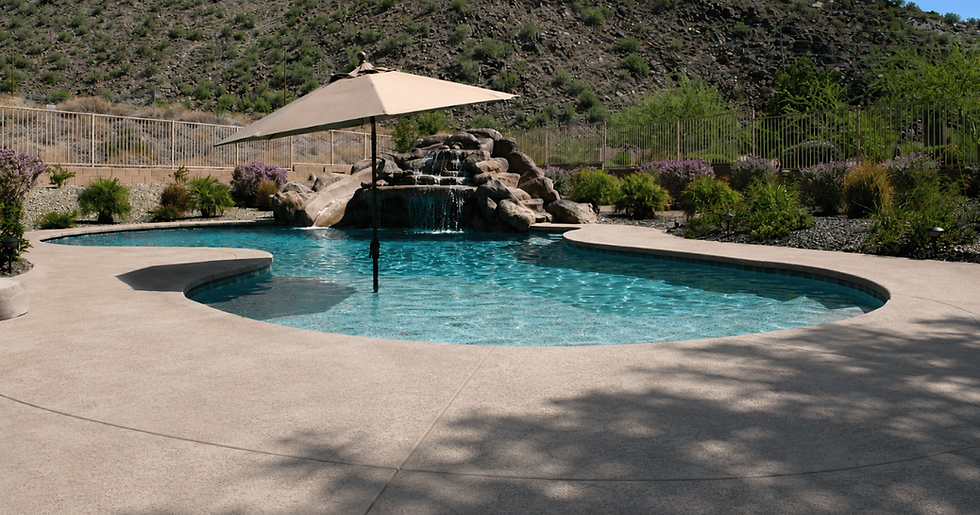
Why Arizona Pool Decks Get So Hot
Traditional concrete absorbs and stores heat throughout the day. Darker finishes, outdated coatings, and standard acrylic surfaces can become dangerously hot under direct sun exposure.
Arizona summers regularly push surface temperatures far beyond the air temperature. On a 110-degree day, standard concrete can exceed 150 degrees at the surface level. That is hot enough to cause burns, especially for children and pets walking barefoot around the pool.
Many older “cool deck” coatings also lose effectiveness over time. As surfaces wear down, discolor, or become sealed improperly, they often trap additional heat instead of reflecting it.
This is where modern overlay systems make a major difference.
What Are Concrete Overlays for Patios and Pool Decks?
Concrete overlays are specialized surface coatings applied over existing concrete. Instead of completely demolishing and replacing your current pool deck, overlays allow homeowners to transform the appearance and performance of the surface without a full reconstruction.
Today’s high-performance overlays are engineered specifically for Arizona climates. They can help:
Reduce surface heat
Improve slip resistance
Modernize outdated concrete
Repair worn or cracked surfaces
Add texture and decorative finishes
Extend the lifespan of existing patios and pool decks
For many homeowners searching for concrete overlays for patios, this solution offers a far more cost-effective alternative compared to full concrete replacement.
The Science Behind Cooler Pool Decks
The key factor behind a cooler pool deck is something called solar reflectance.
Solar reflectance measures how effectively a material reflects sunlight instead of absorbing it. The higher the reflectivity, the cooler the surface remains during direct sun exposure.
Modern overlay systems designed for Arizona conditions use:
Reflective aggregates
Specialized pigments
Heat-resistant polymers
Textured finishes that reduce retained heat
These systems can lower surface temperatures by approximately 10 to 15 degrees compared to traditional concrete coatings or older acrylic finishes.
That temperature difference is significant when you are walking barefoot between the pool, patio seating, and outdoor kitchen areas.
Why Overlays Are Better Than Standard Pool Paint
Many homeowners initially consider repainting their pool deck. While paint may temporarily improve appearance, it does very little to reduce heat.
Standard pool deck paint often:
Peels under Arizona UV exposure
Fades quickly
Retains heat
Becomes slippery when wet
Requires frequent maintenance
Professional overlays are designed to bond directly with the concrete while creating a more durable and temperature-resistant surface.
At Stafford Home & Patio, we help homeowners select overlay finishes that match both the style of the home and the functionality needed for Arizona outdoor living.
Pool Deck Design Matters Too
A cooler pool deck is not only about materials. Proper design also plays a major role in overall comfort.
As experienced patio builders Phoenix homeowners trust, we look at the entire outdoor environment when planning a backyard renovation.
This can include:
Patio cover placement
Shade orientation
Surface color selection
Pool deck layout
Integrated seating walls
Outdoor misting compatibility
Airflow and breeze corridors
Material transitions between pool and patio areas
The goal is to create a cohesive backyard that stays cooler and feels more functional throughout the year.
When Should You Upgrade Your Pool Deck?
There are several signs your current pool deck may need resurfacing or upgrading:
The surface feels extremely hot
Existing coatings are peeling or cracking
The concrete looks dated
You have uneven textures or discoloration
The deck becomes slippery when wet
Bare feet cannot comfortably tolerate the surface
Many Arizona homeowners are surprised by how dramatically a professionally installed overlay can improve both comfort and appearance.
Work with a Phoenix Patio Contractor That Understands Arizona Heat | Cooler Pool Deck Arizona
Not all outdoor surfaces are designed for desert climates. Choosing the right materials makes a major difference in how usable your backyard becomes during the hottest parts of the year.
At Stafford Home & Patio, we design and build outdoor spaces specifically for Arizona living. Whether you are updating an older pool deck or planning a full backyard renovation, our team can help you choose materials that improve comfort, durability, and long-term performance.
If you are searching for patio builders near me Arizona or an experienced Phoenix patio contractor, we are here to help create an outdoor space that looks beautiful and stays cooler all summer long.


Comments